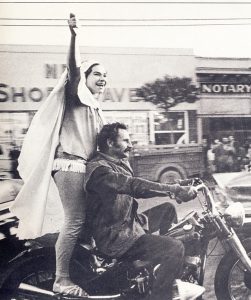
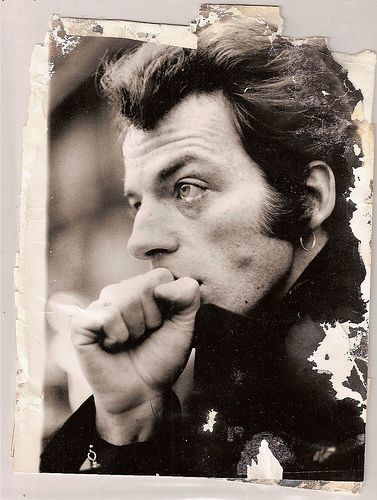
Sometime in 1972, or possibly 1973, freelance journalist Linda Gaboriau conducted an interview with Diggers member Emmett Grogan in the Montreal apartment he shared with his wife, actress Louise Latraverse. The conversation, which centered on Grogan’s recently published third-person memoir/novel Ringolevio, was apparently intended for broadcast on CBC radio, which Gaboriau regularly contributed to.
(Note: It is possible that each of the above statements is factually inaccurate or incomplete. I will update this post as/if I get any new information.)
I don’t know if any or all of this interview was in fact ever broadcast. Some years ago, a member of the Grogan family passed me an audio transfer of the interview, which had been recorded on ⅛-inch tape. The family has recently given me permission to circulate the interview’s contents here. With assistance from longtime Diggers archivist Eric Noble, I created a transcript from the audio file a couple of months ago, and what follows below is a transcript, which I have lightly edited for clarity. Any errors in transcription or editing are mine.
A few quick introductory words: Emmett Grogan has always been acknowledged by other Diggers as a prime mover in their effort, whose ‘membership’ was intended to be anonymous, open and leaderless. Still, Grogan’s name got out there in the press, and he became something of a notorious, talismanic figure in the exploding ‘60s cultural underground. Although Grogan did eventually make appearances and public statements, as well as submit to occasional carefully staged interviews, the publication of Ringolevio in hardcover by Little, Brown and Company in 1972 represented something of an abrupt shift in attitude away from anonymity. It was the first instance in which Grogan discussed his life and upbringing publicly, and its second half, written as a third-person roman à clef, featured a host of characters based on real Diggers. Thus, Ringolevio was the first time a Digger talked at any length about who they were, what they did, and why (and sometimes how) they did it.
There is a lot to be said about what Grogan was doing in writing Ringolevio — why he wrote it, how truthful it was, what impact it had, and so on — but this is not the place for that discussion. Suffice to say that for those who have read Ringolevio — which remains in print 54 years after its initial publication, and 48 years after Grogan’s death — this 5,000-word conversation may act as something of a coda, or unpublished afterword. It’s a set of monologues, parables, quips, asides, ruminations and routines, in response to provocative and sensitive questions from a trusted journalist. Whether it is revelatory is up to the reader.
In any event, I am happy to share this conversation now, and apologize for not making it public earlier. And if you’d like to help cover the costs of the diggersdocs.org effort, donations of any amount at all are appreciated. Click here to get that happening.
Tucson/Patagonia, Arizona
[conversation starts abruptly]
Emmett Grogan: In Montreal, everybody [says,] “Look at what I got! I got a magazine!” [scoffs] “Look what I did yesterday—I wrote a poem!” You wrote a poem? [sarcastic] Great. “It’s all about Louis Riel.” Great. “He died in 1875… We need heroes!” You understand what I’m saying? It’s a boring number. I get into a lot of fights, you know, by saying this here. People jump up and say, “You’re privileged, man! You can say this because you come from…” I say, Where do I come from? I come from here. I can tell you…
[tape cuts]
Emmett: There’s a lot of ways to express anger. I met this one cat who escaped from San Quentin, and he liked to suck people in. His game was, he’d walk into a grocery store, or liquor store, whatever, with baggy clothes on, he’d shuffle in there, trip on his own feet and really come on like a schmuck. And he’d stutter to the owner, the salesman of the place. And he’d say, [stuttering] “I-w-w-want one more p-p-p-pint of Scotch” or something. And the guy would go, “Mm hmm. You got any money?” “I got money.” And the guy would bring the pint of Scotch or wine over to the counter, and before he bagged it, he wanted to see the money. And that’s when this cat became Mr. Cool. He’d pull out his fucking .45. And he’d point it right in the guy’s face and say, [smoothly] “Can I have it please? Thank you.” “Yes. Okay.” ”’And before I leave, I’d like you to do one thing for me, just one thing. I don’t want your money. I just want the little half pint of scotch. But I want you to do one thing. I want you to piss in your pants. And if you don’t, I’ll kill you.”
And he did it a lot. That’s all he ever did, this man. He was 23 years old. He did it to a lot of people. He escaped and escaped again to do it again and again, and that was his way of expressing his anger, okay? “I want you to piss in your pants, mister.” [chuckles] Even when he was caught, the humiliation that the man suffered, the salesman or the owner of the store, suffered when the defense attorney would say, “Did you completely empty your bladder when he asked you to piss? Did you enjoy urinating on your own floor?” I mean, he destroyed the person. He destroyed his victims completely, utterly. Men, women who he encountered, had nightmares forever about this cat, alright? He’s around, enjoying his own fantasy.
And that’s the trouble with Montreal. It’s a fantasy game, man. It’s not real. “Real” is money, “real” is power. “Power” is not Trudeau. Trudeau’s family has been powerful for 100 years. They are not “The People.” They are scumbags.
Linda Gaboriau: I can’t see how the same man who can write, “Take it, it’s free, it’s yours” tells me “power is money.”
There’s two things: there’s money and there’s power. Power is “piss in your pants or I’ll kill you.” Then there’s money: “I’ll give you $1,000 if you piss in your pants… $10,000 if you piss in your pants. $20,000…” You understand?
No, I don’t understand what—
Then there’s another thing, alright, that’s completely bizarre, when you don’t want nothing. And you don’t want to take nothing, and you don’t want to give nothing. You don’t want to be nothing. But by God, you’re not going to go down with your hands up. You know what I mean? I mean, you ain’t gonna surrender under any circumstances, forever. Forever. There ain’t no surrender. No way. There ain’t no way I am going to surrender, right? You get that in your head, and you can walk through walls. I mean, really swim right through ’em.
And when you come into contact with archaic thinking… People sit down and eat “macrobiotic” food, right? And then they put down, DDT, right? Without DDT, you wouldn’t be able to feed half the people in the world. Did you know that? Because some dumb fucking Arab, wherever he was, way back when, became a farmer and fucked up the whole wildlife game. I’m sounding like Neil Cassady here, but the man who blew the wildlife game, the hunter-animal number and started farming, blew the population thing. So [now] some chemical is necessary to feed the world. So you have these elitists sitting around eating brown rice, and you go, “Man, I don’t like brown rice. I hate brown rice.” I’ve been to jail a lot. I don’t like brown rice. I don’t like oatmeal. I don’t like any of that shit. I want to eat something that’s [smacks lips] you know, tasty. So you marry a woman from Quebec and eat good. [chuckles]
Let me just say one more thing before I get off my jag here. There’s one more thing about the game of… you know, the race. There’s a fantastic moment. I don’t know intimately anyone that hasn’t been close to death. I’m not interested in knowing intimately anyone who hasn’t been close to death, because they’re seldom interesting. Unless they’re funny.
Once there was a time I was running away from something, and somebody fired a gun, and I thought I had gotten away, and I thought I had kept on running, and I thought I hadn’t made the fence, and I thought I hadn’t gone over the fence, and I thought I had gone where I had to go to be safe. But I hadn’t. I was shot, and I was laying there dying, hallucinating that I had made it, and I woke up and I was incarcerated. But the whole feeling of that thing, of your head saying “you made it”—even though you didn’t make it—it’s enough.
The best of all these pages is that piece of Ringolevio, this book—the best thing in the book is when Gregory Corso describes how he wants to die. Now, if anybody in the world knows any better way of going out, I want to meet the motherfuckers, and I want to hear it, right? And I want to try to stage this myself, because it’s a beauty, you know? I mean when Gregory says, “Hey, man”—and Gregory has this way of talking, he’s beautiful—he says, “I got it all figured out, man.” And you can look at Gregory and you know he’s got nothing figured out! You know he ain’t got the next minute figured out, right? But he got it figured out [how] he’s going to go out that way. He wants to have all his friends around him, or ten of his friends, or five of his friends, or one of his friends, or none of his friends, just a couple of people, and he wants one of them dummies to ask him, “Gregory, since you’ve lived a full life, man, what was it like? What was it like, Gregory, what was it really like?” And Gregory wants to prop up on his fucking elbows, in bed, and tell that sucker what it was like. He wants to tell him, “It was nowhere” and he wants to die. “It was nowhere.” Okay? Now you get around that. Right? That’s a nice way to end the book.
That’s not the way you ended it… [changing tack:] I’d like to do a quick interview with “Kenny Wisdom,” a quick interview with Emmett Grogan, and then a quick interview, or maybe not so quick, with the guy that Emmett Grogan is just about to sort of become.
Do “Kenny Wisdom” right now.
Because there were moments about five minutes ago—
Yeah, I know, I’m the same cat. Ain’t no different between anybody. I’m him—I’m the guy and I’m it. And it’s a shame.
Why is it a shame?
It hurts too much. [pauses, then defiant, quietly] I ain’t bawling. So: question Kenny Wisdom about something. Ask Kenny something.
Well, what’s the thing that hurt you most when you used to look at your mother? What are the things that really hurt? What do you think that no woman should have to know, have to live through? No man, no woman, no one you love.
[long pause]
I only ask because I had the feeling that something made Kenny wisdom very angry, and it was things that had to do with when he looked at his mother and when he looked at his father and when he looked at them with other people.
Kenny and Emmett—me—we never looked in the eyes of our parents. Because it hurt us too much. We knew if we looked in their eyes… It’s the same thing as two maniacs in an insane asylum looking at each other’s eyes and clocking each other and saying, “Okay, you’re insane? Well, I’m insane too, baby, and you ain’t gonna forget it.” And there was a sadness that was too deep for me to look at, and I refused to look at it. That’s why I gave you silence as an answer. I never really looked at it. [quietly] And I never will.
What pushed you most when you were 10, 11, 12…?
The nuns. And Joe McCarthy. Can you believe that? Every morning when we’d come to school…. I had this fantastic wheeze when I was a kid. [makes asthmatic wheezing sound] And I used to stutter. I had these big freckles, which I call “angel kisses.” If anybody ever called me freckle face, I would fight to my death. I mean, really. And I got in serious trouble, beating up this older girl once, knocking her teeth out, doing everything to her, for doing that, calling me freckle face, or [for] stuttering [inaud] or something.
I went to class one day. The sister’s name was Dunston. Sister Dunston, I was in the fifth grade, or sixth grade. I went in there, and on the wall she had a picture of Joe McCarthy, Senator Joseph McCarthy. She was an old Irish nun of the Notre Dame sisters order, or something like that. And when we came in the classroom, we’d all stand up and we had to say a prayer, and she’d pray for Joe McCarthy. And I had a game I used to run on her all the time, because I was that kind of guy. I’m still that kind, but I used to steal the chalk from the blackboard and hide it or throw it out the window, and there’d be no chalk. And she’d say, “Oh, my God, there’s no chalk.” Then I’d say, “Oh, I’ll get some chalk.” And I’d split. Sneak a smoke in the bathroom, go to some other classroom, get some chalk, come back.
Anyway, one day, I decided that I was an asshole for doing this [inaud] every fucking morning and Sister Dunston… I always missed the prayer. I had never been to the prayer for like three months, September to November, for Joe McCarthy. And I didn’t know who the fuck Joe McCarthy is… I saw him on television. Joe McCarthy, right? He was on TV every day saying, “You’re a fucking communist. Don’t you know any communists?” I didn’t know what was going on. I was a kid. But she said something that was weird with her Irish brogue. She said, “This man is,” you know… [changes up] My father, in one of his moments of courage, which were few and far between, he said that McCarthy was just another alky or something, a juice head, just an Irish juicehead, to my mother. I had overheard him, and I believed my father, because he never said much. And she wanted us to say a hail Mary for Joe McCarthy.
[tape cuts out]
Emmett: She didn’t ask me in particular. The classroom was gonna do their number like we did every morning for the three months that I had missed, and Joe McCarthy’s picture was on the wall as you came in door, and I was in the the back seat of the second row, and next to me was a girl named Stephanie, whose last name we shall not mention, who was a very pretty Italian girl. And they started doing their prayers, everybody, and I wasn’t used to it, I hadn’t been there for three months. I’d always copped the chalk, you know, and go find chalk or the erasers or something. And she’d always pat me on the head and say [in brogue] “Ih my beautiful Irish…” Dumb fucking nun. So I was there, and all of a sudden she started spouting about Joe McCarthy, and I looked at Stephanie, and Stephanie was just doing her, you know, habitual number, and I pulled down her pants, and we’re doing this thing back in the back seats. And the sister saw us. She saw something was happening. She saw I wasn’t looking at, you know, her, I was jiving with somebody. I guess she felt some kind of bad vibe, right? So what she did, she didn’t have the balls to come down that aisle and to catch us in the act. What she did was this: she went through her prayer routine. Then she said, “We’re going to read out of a history book” or some kind of book, and everybody couple up with somebody else. And she said, Grogan, come up here to the front and sit with this guy named Edmund Connors. And I couldn’t… When I was talking to someone, I couldn’t speak very well. I would stutter. When I read, I got into a thing, and I would just read. It was mellifluous—not really, but, you know, it didn’t stop and go, it went. So we were reading from this fucking book, and this kid, Edmond, was stuttering, you know, and this sister, Dunson, was smacking me in the face. Every time he was sitting next to me, she’d smack me in the face. And I knew she knew I wasn’t doing it, and I knew she knew he was doing it, but she was smacking me. So of course, I wanted to kill her. And the class was over, and I had a welt on my face like that. You know, big. It was about three o’clock. We’re going out, and everybody else is gone. And I sat there looking at this woman, this old woman, 65 years old, whose arms I could have tore out of her body and beat her to death with. I looked at her. I was ten years old, nine years old. I just stared at her. She stared back at me. And I got up, I went over to that fucking picture on the wall, and I took it. Joe McCarthy, who I didn’t have any opinion of whatsoever, and I tore it to shreds, threw it in the air. I said something nasty. And I left. And she died. That’s the truth.
She died right then and there?
No, a couple days [later]. Over the weekend or something, I forget. But they threw me out of that school. It was a very funny scene. We were preparing for… [pauses, restarts] We used to have monitors, you know? The older kids, eighth graders, used to be, you know, with their white things, you know. “Cross.” “Don’t cross.” “Stop.” The number two guys. And a lot of people don’t like me because they don’t like me. They just don’t like me. They don’t like the way I walk. Not because I’m me. Just, people don’t like other people. So these two guys had it in for me because I was into Stephanie’s pants right in the back row, and this guy was [inaud], right? It was insane. Anyway, since Dunstan had died and gone away, and it was my secret, in fact, almost to this day, except, I think I told my father that I had killed somebody. But these two guys came into the class at one o’clock after we came back from lunch, and it was still a six and a half grade, like 6b or something, and they were in the eighth grade or seventh grade or 7b, which means they were a year or two older and therefore much bigger than we were, and they had a traffic ticket for me because I had crossed against the green or red light or something which was jive. We were all tough. “Tough” means, you know, “Hey, fuck you” and [replying] “Fuck you.” Oh, that’s what “tough” means. Tough means tough — mean. Tough means you can take it—and lump it.
So one guy’s name was, we’ll call him O.D. That was his name, really. O.D, he was a snitch, and a couple years later, he became the biggest stool pigeon around. And the other guy’s name was Doc. And they had a cloak room. Used to hang up your coats and sit in the classroom and then it’d be over there, put your coats over here in the cloakroom. And these two dudes came in, and they said to the nun something, and they were “authority” to the nuns. They were upstairs, and she was downstairs, and she was handling younger kids. They wanted to see me in the cloakroom, these two guys. And they lived in a very nice neighborhood. See, I came from above a storefront. We lived above a storefront-type of thing. These people live in houses. I don’t know what “living in a house” is, to this day. Hotels…? “House.” They lived in houses that their parents owned, and they called me in the cloak room. They had this traffic ticket, and they said I crossed against a green light or red light, or whatever. I just stood there, and I realized they were coming on, you know, they were saying something that was, you know, they were doing something that wasn’t right. They were saying, like, you know, don’t come on to what’s her name, Stephanie, because Stephanie is his chick or something, which is when I went bananas and the guy got hurt.
A lot of people got hurt, and they expelled me from the school.
There’s that whole thing about, you know… Is that defiance? It wasn’t nothing to do with a moral. It’s got to do with, you know: “I. Ain’t. Gonna. Go. Down. Like. My. Old. Man. Went. Down. God. Damn. Your. Motherfucking. Soul.” I ain’t gonna do it. I don’t care if… You can pay me to die. I ain’t gonna fall for it. I just ain’t gonna do it. I’m not going for it.
So you pay some dues, and you learn how to control your anger, and you control your anger, and it gets into your bones. When it gets into your bones, you can’t sleep. You got to drink a lot or take dope.
[inaud question]
Money? No. Money didn’t mean nothing. Money never meant nothing. Whatever you wanted, you can get. If you wanted a chick from Shanghai, you can get it, for a nickel. It was heart. My father had no heart. My father killed a man by accident. He never got over it, which is a shame, because I did.
How did it happen?
Notre Dame University. My father was 15 years old. He was a senior in University of Notre Dame, right, which is pretty young to be a senior at university. And he knew all the speakeasies. And all these football players wanted to go to this one speakeasy which he knew. He didn’t want to go. He wanted to study, he wanted to be an architect. Anyway, he went. And there were all these guys with Studebaker. Studebaker corporation, from South Indiana. Polish guys. Rough, tough, tumble guys. And a fight happened somehow and someone hit his head. A Studebaker worker hit his head and he died on the ground. Now the only guy the owner of the speakeasy knew was my father, cuz he had been there a couple of times. The other guys, the football players, he didn’t know. He pinned my father. And my father was given a choice to tell who was with him [inaud]. And he walked. He came from a big family, my father, like five brothers… Then he became an office boy. After the family had put so much money into his education, he became an office boy on Wall Street, a broker, and he never told me this story. I learned this story only six years ago, seven years ago. I was home from Europe. I answered the doorbell, and I saw these monstrous, fat fucking faced men, about 10 guys there, and they said, “Spike here?” I said, “Who’s Spike?” “Spike.” “Who the fuck is Spike?” “Spike Grogan. He’s your father, you asshole.” And he was my father.
He blew it. You understand what I’m saying? I’m not connecting it very well, but… he blew his life away. Somehow.
In the whole first part of your book, I had the feeling that the thing that made you run, or walk, was to get enough money to be able to do what you wanted.
I wanted to get away.
Away from what?
Them. Asthma. Freckles. I wanted to go to the Mediterranean and get me a suntan. That’s all I wanted to do.
And that took money.
Yeah. Took money, took brains, took knowledge.
[tape cuts out]
The reason I asked you about money was because the book seemed to be divided into two people, two parts, or something. And I really had the feeling that for Kenny Wisdom to be happy, he had to have the money to get him where he wanted to be. And for Emmett Grogan to be happy, in the second part of the book, he had to not care about money anymore to be where he wanted to be. And I don’t know whether that was just me reading into something, or did that happen? I mean, was an attitude towards money, did it change in different moments?
Yeah. It changed. It’s like I was telling you before, the only thing that keeps me sane is my insanity, which is pretentious but true, because, like, when I was a kid, the money I earned bought me what I needed. When I was more than a kid, the money I earned bought what other people needed, which was more than I needed. In other words, I needed what they needed more than they needed. And it’s a hard battle.
It’s like all of a sudden you’re the best. Ain’t nobody else that’s as good as you. See them spices you got over there? Ain’t nobody that could manipulate a million bottles of them spices like I can. You find that out, okay? And you push it. And you push it. You push, you push, whatever you got—whatever talent you got—as far as you can go, and “as far as you can go” ain’t third place. “As far as you can go” is first place or it’s death. You understand about Montreal now being [backwards]? Okay? I pushed it, I pushed it. I pushed it with every group I ever came against or ever came in contact with, or assembled with, or ran with, or hung out with, or did things with. Men, women, children, psychotics, whatever. It ain’t nobody as good as me doing one thing, and I can only do one thing. Just one thing. And that’s a secret.
What I’m trying to say is: everybody has got that secret. You understand? Every person has got that one thing in ‘em that they know they can do. I can’t be heavyweight champion of the world. I can’t be Gordie Howe. I can’t be blah, blah, blah. But I can be me. I can push it till they kill me for it. They can say, “Hey, you, you can’t be you anymore.” And I’ll say, “Hey, I can be me until you stop me from being me. The only way you can stop me from being me, motherfucker, is shoot me.” You understand?
Now, the other thing that’s very important, that makes me insane, makes me angry and makes me spit at most people, is they’re not happy. They’re not happy! They don’t like it, they don’t like to be them. I mean, that’s what.. Fred Hampton taught me something that was… I was really down when I met Fred. When I met Fred Hampton, it was one of the lowest periods of my life. It was in ‘68, fall. And it was one of the lowest, I was, really everybody was… I was alone. That whole number. And I was in a town that I had no idea how to deal with: Chicago. It’s a heavy number, Chicago. And I made swift connections—heavy connections, but swift. I didn’t know whether to trust them or not and what I was doing. And all of a sudden, I said, “Let’s see what this cat is all about.” And I met this cat. And he laughed and laughed, and he was so happy, you know, he was so turned on by what he was doing. And I realized that I was a fool. This fucking 21-year-old cat had it down. He was ready. “You dig my motherfucking grave, baby, I’ll come and I’ll go and I’ll lay in it and laugh in your face.” He don’t care. He just had it. He threw it at me, and I caught it and I ran with it. And we had a good time, a couple months. I went away, and they killed him because he was too much for them to handle. But my premise is to sneak all the way. His premise was to stand up there and say, boom, boom. That ain’t me, I ain’t like that. I ain’t like that at all. I’m…under the table.
Are you still under the table?
Sure.
Because I couldn’t figure that one out. Because you wrote the book.
That book? Who believes that book? They got ten cops trying to figure out that book. They can’t figure it out. I believe it. I know it happened. I believe it, I was there. Like the man said, good old R. G. Davis. He said, If you weren’t there — [chuckles] he was there — you can’t believe it. I don’t care. It’s a good book. It’s not good literature. It’s a trip.
[Huey Newton] said in the book, it isn’t true even if it did happen, or he said it’s true even if it didn’t happen…? He said it’s true, not about you, but just it’s true even if it didn’t—
Huey Newton called me up the other day. He said he gave me a name, a nickname. When I say the other day, I mean a year ago. He said, “Emmett, I hope you don’t get insulted by this, but we’re talking about it, we may have a name or a nickname to call you.” I said, “Okay, what is it?” He said, “We’re gonna call you ‘Fast Life, ‘ man. You are now known as ‘Fast Life.’” I said, “Okay. [quietly] Goodbye.”
Which means that “Fast Life” is like “Cool Breeze.” [They] made a movie called “Cool Breeze” [inaud] to fuck with people.
I mean, they’re picking this book apart. I know this. I get letters. I get funny letters from people. The people who understand it most are women, for some strange reason. They understand it completely. Have no inhibition. Men go [makes tut-tut sound], “No way. Bullshit. Ah man, come on. Who you fucking kidding?” I ain’t kidding nobody. I ain’t kidding myself, I ain’t kidding nobody else. I ain’t kidding them. But the police understand it. [chuckles] They know I’m guilty, but they have no case. Which means I’m innocent.
I get all these letters, that are funny letters, from people saying, [for example] “The last paragraph from the book is Kenny answering one of them hate letters you know, says something about…” [switches topic] Some cat wrote a poem to me in a telegram saying, “All us heartbroken lovers are awaiting our release,” right? And, “You were better when you were a scuffling junkie,” and you were this and that and every other fucking thing. And that’s why I put the last sentence of the book, you know? I wrote the book for all the heartbroken lovers he left behind awaiting their release. You know? Fuck ‘em. I ain’t living for nobody but me. You can be married to ten women, you can have a hundred children…and you’re alone. And that’s what the next book’s all about. I’m writing another book…
How come you write? I’m wondering why you write instead of doing it some other way…
I’ve done it every other way I can, and they don’t listen. The only people that listen when I do it any other way are the police. And I’m sick of talking to the police, all right? I’m sick of telling them why—or why not. I’m sick of telling them nothing.
But who did you write Ringolevio [inaud] for?
Kenny Wisdom. Joey Antonucci. Bobo. Buckeye.
Do you think they read it?
They read it. They stole it and read it. Everybody that I ever grew up with read this book, and they knew… The reason I wrote it was I came back from California one day and they said, “What’ve you been doing?” I couldn’t answer. So, I answered them. So. With the next one—
Do you think they learned anything?
Yeah. Who I am. That’s all. That’s all it’s supposed to be. And also, they have to learn not to trust me—or anyone else—but themselves. If that book don’t tell you not to trust anybody, you’re a fool—you don’t know how to read a book. That book tells you not to trust anyone.
The next book is about a theme song, which is the impossibility of fair play in a democratic society because of the overwhelming burden of loneliness. Sounds, you know, the way it sounds… But it’s true. In a competitive society, nobody plays fair, so I intend to play really dirty for the rest of my life. [Quiet, sarcastic laugh] Ah ha ha.
I am not who you think I am. I will not give you any more bread. I will not give you any more food. I will not give you anything at all, unless you pay for it, [in priest’s voice] My children. You broke my back. And I’m gonna get even with all of you.
[tape cuts out]
In the second part of the book, it’s all about everything being free, and what you just said is that you’re not going to give it anyway. Why? I don’t understand what happened?
What happened was, I gave it and they took it. No, they didn’t take it. [pauses, reconsiders] Instead of, you know, me giving it—or not me personally, but us giving it, they got it. Now I’m going to put a little thing up there. So they’re gonna have to come and get it. They’re gonna take it. In other words, they’re gonna have to learn how to get it for themselves.
You understand?
 Diggers Docs