From Diggers archivist Eric Noble:
“After I moved out of the Kaliflower commune — where I’d first gotten bit by the ‘history bug’ — I sought out Frances Keller, a professor at San Francisco State who allowed me to audit her introductory course for history majors. Dr. Keller encouraged me to find a topic that connected to my interests and my background. I chose the Artists Liberation Front and began interviewing people who had been involved in that seminal 1966 moment.
“Barbara Wohl was the exceptional discovery. She was the ideal ‘informer,’ in the anthropological sense: someone who could articulate the underlying ideas that motivated a generation. Barbara had been a member of the San Francisco Mime Troupe during its political turn, one of the organizers of the Free Fairs, and an early observer — and collaborator — with the Diggers.
“She moved through all those circles as both participant and witness. What she offered wasn’t just recollection but interpretation. Barbara made clear that the ALF’s real innovation was the collapsing of the boundary between audience and performer — a shift that the Diggers would go on to enshrine in their own practices. That insight became a central idea of the paper I wrote for Dr. Keller. The excerpt from our interview that follows demonstrates Barbara’s keen insight.”
My gratitude to Eric for generously sharing his recordings of his 1980 interview with Barbara Wohl, and allowing me to run excerpts specifically related to the Diggers, culled from my transcriptions of the interview, here, with Eric’s introduction. Any errors of transcription — or misrepresentation through editing are, of course, mine. — Jay Babcock
On the times
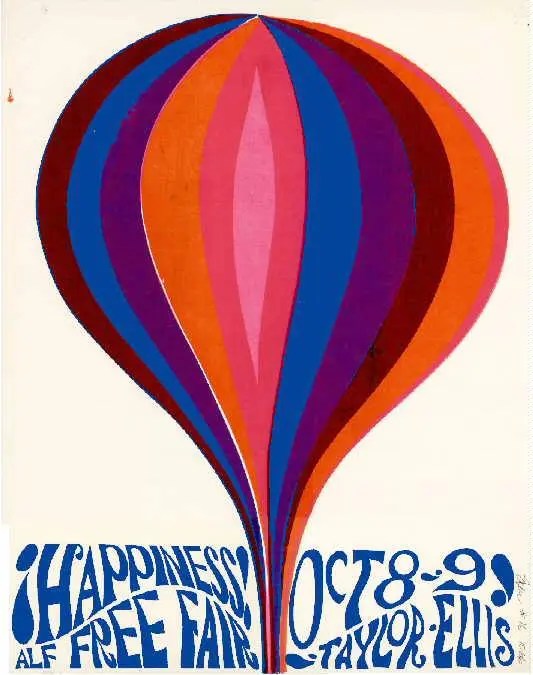
Barbara Wohl: I didn’t articulate it to myself at the time, but what the point of the Free Fairs was, was not to have artists displaying their works, finished products, but to have the supplies there so people could make their own art. That was the basic idea of the fairs. It is not someone coming to observe [an artist vendor’s] picture, but where whoever happened to walk up and see the paints could become the artist and do his thing, make his own art, be a participant. This was meant to be, and is, a very political thing. It was the beginning of this burgeoning toward not passively allowing the government to go on with the war. This erasing of the difference between the performer and the performed upon was the real nitty gritty of that, the politics of the whole thing.
[The Artists Liberation Front] was an extension, for the most part, of the very loving tender attitude that people had toward each other. I haven’t seen it since. It was just that short of a bubble of time. If you weren’t there, you [can’t] even believe it happened — that you could trust anybody at any time, nobody would ever get hurt, and nothing was ever out there to hurt you. Which was why it was a very nice time to be stoned all the time, drop a lot of acid and so on and so forth, because the whole world was just dying to be nice to you. People were beautiful on the street — you could reach out and touch them and men didn’t mind being touched and the women didn’t mind being touched. Nobody was using anybody. Everybody was just…very kind. Or at least that’s what I saw. But maybe I had innocent eyes.
On the Mime Troupe’s impact
I wasn’t political… I was a flower child. But I was interested in the theater, and this [the Mime Troupe] was the best theater about and these were the best brains about. The Mime Troupe was the most incredible bunch of heads I have ever seen in my life. They were brilliant people, every one.
The things that came out of the Troupe were just amazing. One thing after another that was beneficial. New ideas. Peter [Berg] was talking about two things — it may have been somebody else [because] we weren’t patenting things in those days. One is, “revolution” is not a Revolution… we didn’t want to bring down the world or whatever, it was a revolution that takes place within yourself. The revolution is an independent thing that takes place individually, in yourself. If that happens to me, and to him, and to you, then you do have a change. A Christian idea, what is within yourself. You stop [something] with yourself. Whoever is going to take the next blow. You change… It doesn’t have to be limited to that. The revolution occurs within yourself, it’s a mystical happening, of opening.
Peter’s other rap that night was that the man of power, before this time, was the man of constancy. Meaning you could always depend upon him to behave in a certain way in a given situation: white knight to the rescue. The man of power in the future would be the man with a shifting sense of self; today I am this thing, a leader of the Haight, tomorrow I may be a bum on the street, I may be a stockbroker. Whatever is appropriate to the time. What was appropriate in our fathers’ time was not appropriate then, so therefore tomorrow what we are [right now] may not be appropriate. As Lenny Bruce, I believe, said, there is nothing sadder than an aging hipster, which we were all determined not to be!
On Arthur Lisch and Hunters Point
Arthur Lisch had a children’s program at Hunters Point. He played with the kids, cleared off areas, helped them make gardens. He’d try to help them put [a garden] together and then they’d mess it up and he was trying to let them know they were messing up their own thing, not somebody else’s, so what they’re doing is against themselves, and they’ve got enough things set up against them, they don’t need to do it to themselves too. He was terrific.
Hunters Point was a dump then. Later I would go up there as a social worker and you’d walk into a house and you’d eat off the floor. The outside was a dump… Beer bottles and everything thrown all over the place. He would help clear it off, and while [doing that] he would try to get the kids to participate in it. The whole thing was getting people to participate for their own benefit!
They needed food breaks. If only they had something to eat, he could keep the kids there, keep the attention of the kids. Also, these kids needed to be fed. So. The Panthers came in and did it a little later. [Art] was already up there and involved.
For the fair at Hunters Point, we demanded that there be food out there. I remember saying passionately [at a meeting], If only someone could let the Diggers know that food was needed out there. And Emmett got up and said, [very quietly] There will be food there. And that was the first time I had any inkling. My jaw dropped.
On the Diggers’ anonymity
[Peter Berg and Emmett Grogan] were very secret about it. I didn’t know for months, for a year, that they were the Diggers! I didn’t know. I knew “free food” kept popping up. But it wasn’t [until after] the Free Fairs [that] I knew that Emmett and Peter were doing the feed.
They prided themselves on anonymity. Peter, I think, said that you lose your power as soon as you lose your anonymity. You can move and do things if nobody notices you, or nobody knows who you are. But once somebody has identified you, then you don’t have the power of freedom to move anymore. So, everybody tried to keep anonymous and had fake names and so on and so forth.
[Emmett] would slip in and out. I got in a fight with Peter Berg once on the phone because we weren’t getting enough back-up from him and we were having problems of exhaustion. There’s just so far speed and wine can go. We wanted to be a nonprofit corporation. Yuri [Toropov] and I wanted some help. If we didn’t [become a nonprofit], the people that were giving us money, or who wanted to give us money, wouldn’t have the tax benefit from it. Which meant we couldn’t solicit funds. What we’d done… [the free fairs]… we wanted to do everything. We didn’t want to stop.
Peter Berg and [Peter] Cohon — I think — wanted it not to be a nonprofit, because if it were a nonprofit then we could not be political, and we were political, and we didn’t want to give that up. It was more important to give up money than it was to give up what we thought, and what we were all about. I didn’t agree to that at the time, because there were so many things we could have done and slid by, on that edge.
I remember getting into this furor with Peter Berg. I had just reached some turning point in therapy and had gotten mad for the first time in my life. I was taking it out on anyone I could find, joyfully, and Peter was the recipient of it one time. We needed this, that and the other. I listed 15 or 20 things, and one of the things we needed was nails. We had gone through all the hardware stores in the yellow pages. We needed paint, we needed paper, we needed nails, we needed wood, and you’d get on the phone and ask every one on down the line if they would donate such and such. And we got almost everything, but we were short of nails — and the carpenter was coming. And Emmett, very graceful, very lovely, very handsome, glided in with a box of nails. Gave them to me, silently, and slipped away. He was a bearer of gifts.
On the ethos of the time
People [donated stuff and] made me promise to forget them. [Harry] McCune gave us all the sound equipment for everything we did, then and thereafter. Peter [Berg] called up one day and said, I’ve got a flatbed truck, we’re supposed to have music at 4 in the park and we don’t have anything. It was 2 on a Sunday or something like that. I went down and talked to McCune and he gave it to us and we were set up. And of course [we had to] sneak it out [so] no one would see the McCune truck — if anybody found out that McCune was giving stuff away, then McCune was screwed. McCune was this hard, heavy, never-give-anything-away bastard in the community who charged a fortune for the best sound equipment in town. He warned us never to get the reputation for giving things away, or for always wanting something given to you. “It’ll kill you. Keep that highly clandestine.”
It was impolite to ask anybody their name. There was a code of the West that did come through here. San Francisco being San Francisco, and the end of the frontier, it was impolite to ask a man’s name. Accept his humanity. You don’t ask a man his name. People like one of our housemates, who was supposedly wanted by the FBI, who was a very pleasant person around. And there was somebody else who had escaped from an insane asylum in Washington state, and they finally found him down here. And they found that his adventures in the Haight had brought him closer to mental health than in all his time in all those psychiatric hospitals, so they left him, sort of in the community’s care.
There was something of that old idea of making a fresh start: you can get lost, be anonymous, nobody knew who you were, nobody asked your name, nobody gave a damn. It’s what you did here and now. And there is your fresh start. It was a re-awakening of a kind of frontier, pioneer spirit. Frontiers of the mind [laughs]. There was a chance to be noble, on your own terms, in a new place, where nobody gave a damn about what you had been before. Everybody was entitled to the shifting sense of self, and everybody was given credit for change.
That kind of freedom is dependent on [Thorstein] Veblen’s theory of the leisure class. There has to be enough loose money around. When people have enough extra to give you stuff, to patronize the arts or the strange thinkers in whatever way. A healthy economy, or a disastrous one: one or the other seems to be necessary. Either there has to be extra money to support you, so that you don’t have to have a gig, and you can have the leisure to think, OR it’s got to be so bad there’s no way to get a job so you’re free to possibilities, to devote your mind to other things. [laughs] There were a lot of good artists in the ‘30s and the ‘60s, in the bad times and the good times. [chuckles] That might be bullshit, but it sounds interesting at that moment.
On the Free Fair at the Panhandle
That’s when Yuri got busted. There was a drunken cop that had caused a lot of trouble on that beat. Art Lisch, who was also in the Mime Troupe, played his flute and had his little parade of kids and Yuri’s great dane.
Toward the end, when it was time to shut up, everyone was going on and our permit ended at a certain time. We stopped the music at a certain time but there were wires and everything all over the place — to the generator, to the microphone, to the equipment. And people were still milling around. So we left the lights on so people wouldn’t hurt themselves. We had insurance but we still didn’t want anybody to hurt themselves. And we were cleaning up, besides. We did an excellent job of clean-up. The cop went over and pulled the wire out of the generator, plunging us all in darkness. People immediately [cried out]. Yuri went over and [said], Say man, and plugged it back in. And therein began an altercation. [Arthur] Lisch went up the paddywagon and wrapped a red bandana around the bumper and he was immediately asked for identification. He said, Oh it’s in the car, I’ll get it. And he took two steps away and they arrested him and threw him in for attempting to escape and malicious mischief for having tied the bandana on and resisting arrest and so on and so forth.
There were all sorts of little busts in the community, not just regarding the Free Fairs, but all over, that were not real busts. They were false arrests, harassment arrests. And the charges would always be dropped, but there was poverty in the community, and we had to put up the bail money. It just made things that much harder and that much more tedious. … We knew ‘don’t be caught holding,’ and ‘don’t deal [drugs] with kids. Don’t deal with anyone under 20, because kids can be frightened into saying things that you don’t want to stay.’ Those were two cardinal rules.
On the Invisible Circus
[I remember] only arriving there very late. Yuri and I sold buttons at the Fillmore and the Avalon. And after we’d sold our buttons we came to this thing. It was the tail-end of everything. All hell had broken loose. I think someone made love on the altar, which was scandalous. Terrible. I grew up in the Methodist Church. It IS scandalous. Judy [Goldhaft], I remember, in her bellydancing costume, and several other women. Lynn Brown, she’s another one, a member of the Troupe, very good actress. Tall willowy woman. I don’t remember anything else about it except arriving there — [I was] always dead tired, always slightly stoned — and seeing the ends of things. [I realized] Oh Christ, I’m only here for the clean-up.
And Cecil Williams had sort of split. This other minister, Louie Durham, was taking the weight. It was either that time or at the Fair, he always seemed to be taking the weight. He could really handle things. Cecil was very powerful in the preacher’s box.
On the period when everyone was valuable
Everybody sort of had their job to do in the community. You did your job and you were part of the community. Every person was as valuable as every other. The man I was living with, after a while he cooked for the Diggers for about four months, that meal in the Panhandle at 4 o’clock every afternoon. I could manipulate getting sound equipment onstage. But there was this gradual separation [to] where the rock performers were people to be worshiped and the rest of us were those to worship. It just changed the whole character and nature of the Flower Child era. And it disappeared.
I have incurred significant expenses in my Diggers research through the years. If you would like to support my work, please donate via PayPal or Buy Me a Coffee or Venmo. Contributions of any size are greatly appreciated. Thank you! – Jay


